19. Jeju Island First-Visit Guide — Korea's Volcanic UNESCO Island
If you only add one trip outside Seoul to your Korea itinerary, make it Jeju Island. Sitting in the sea about an hour's flight south of the mainland, Jeju is a volcanic island built around a single dormant volcano, ringed by black lava coastline, green tea fields, waterfalls, and beaches. It is the only place on Earth to hold all three of UNESCO's major natural designations at once.
For first-time visitors, Jeju is the easy half of Korea: warm weather, wide-open nature, fresh seafood, and a relaxed pace that feels worlds away from the capital. And reaching it could not be simpler — the Seoul-to-Jeju air route is the busiest in the world, with flights leaving almost every few minutes.
Quick Info
- Location: Jeju-do, an island ~85 km off Korea's southern coast (separate self-governing province)
- Getting there: ~1 hr 15 min flight from Seoul Gimpo (GMP) to Jeju (CJU)
- Flight cost: Often $30–60 one way on budget carriers if booked ahead
- UNESCO status: Biosphere Reserve (2002), World Natural Heritage (2007), Global Geopark (2010)
- Best time: Spring (Mar–May) and autumn (Sep–Nov); warmest region in Korea year-round
- Time needed: 3 days minimum, 4–5 days to see both east and west
- Getting around: Rental car is best (physical IDP required); buses and day-hire taxis also work
- English: Moderate — major sites are bilingual, smaller villages are Korean only
- Best for: Nature lovers, hikers, foodies, couples, families, slow travelers
In One Line
Jeju is Korea's volcanic island getaway — a one-hour flight from Seoul to a world of craters, lava caves, waterfalls, and the country's best black pork barbecue.
Why Visit Jeju Island
1. A Whole Island Built by a Volcano
Jeju was formed by volcanic eruptions over hundreds of thousands of years. At its center stands Hallasan, at 1,947 m the highest mountain in South Korea, a shield volcano with a crater lake at the summit. Around it, more than 360 smaller cinder cones (called oreum) dot the landscape, and underground lie some of the longest lava tubes in the world. The whole island is essentially one giant geology lesson you can hike through.
2. The UNESCO Triple Crown
Very few places carry even one UNESCO natural title. Jeju holds all three — Biosphere Reserve, World Natural Heritage, and Global Geopark — and was also named one of the New 7 Wonders of Nature in 2011. It is the only site on the planet with this combination, which tells you something about how special the landscape is.
3. The Haenyeo — Korea's Diving Grandmothers
Jeju is home to the haenyeo, women who free-dive without oxygen tanks to harvest abalone, conch, and seaweed from the seabed, often into their 70s and 80s. This centuries-old, female-led diving culture is recognized by UNESCO as Intangible Cultural Heritage. You can still watch them work along the coast and eat what they catch, served fresh at seaside stalls.
4. Nature Without the Crowds of Seoul
After the intensity of the capital, Jeju feels like exhaling. Coastal roads, walking trails, beaches, and tangerine groves give the island a slow, open rhythm. It is where Koreans themselves go to honeymoon, retire, and escape — the local version of a tropical break.
What to See and Do
Hallasan National Park (한라산)
- What: Korea's highest peak (1,947 m) with the Baengnokdam crater lake at the summit
- Admission: Free (parking ₩1,800–5,000)
- Trails: Seongpanak (gentler, ~9.6 km one way) and Gwaneumsa (steeper, more scenic) reach the summit; a full round takes 8–9 hours
- Note: The two summit trails require a free advance reservation through the official Hallasan site — book before you fly
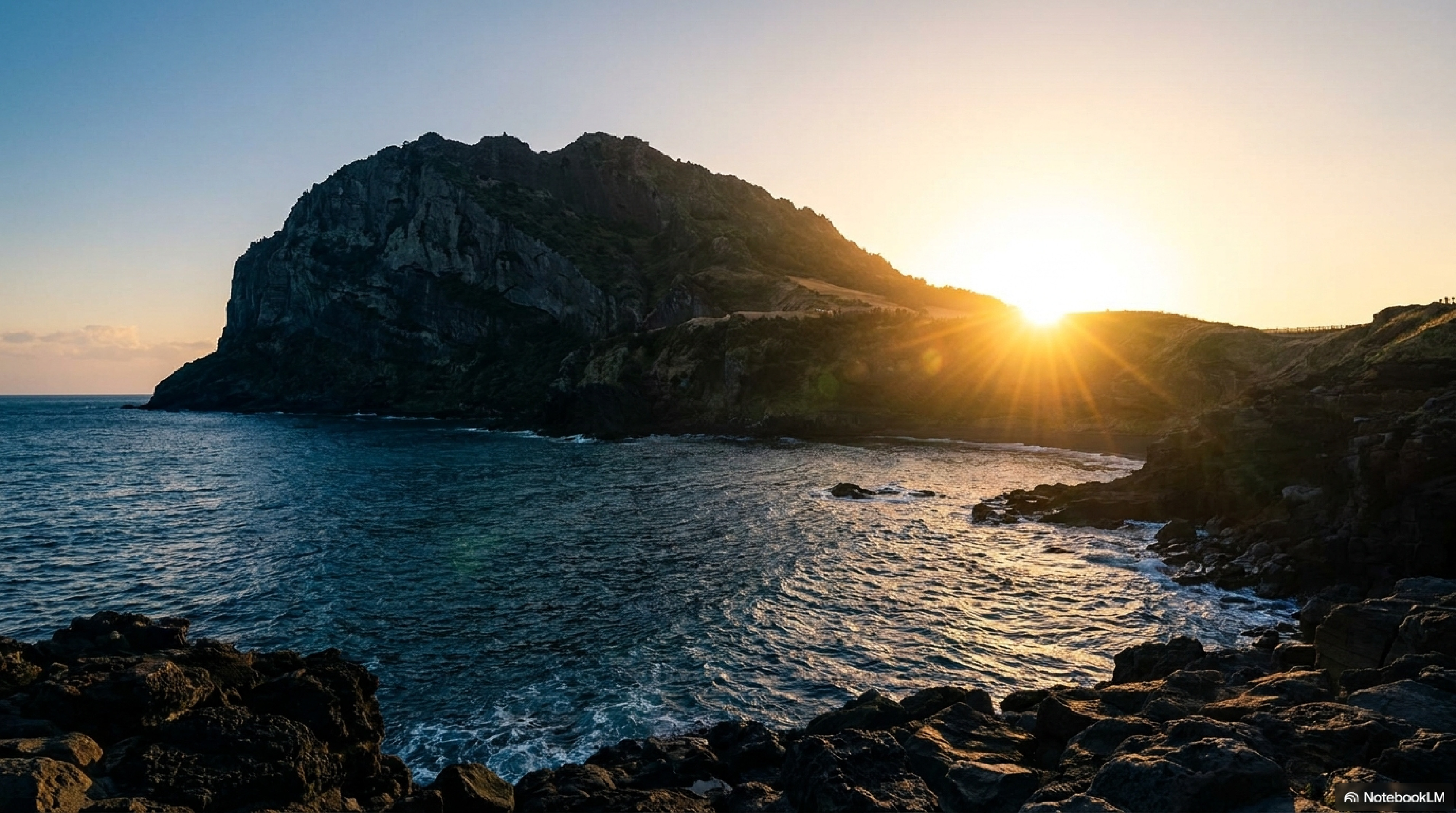
Seongsan Ilchulbong — Sunrise Peak (성산일출봉)
- What: A dramatic 182 m tuff cone rising straight out of the sea, formed by a hydrovolcanic eruption; a UNESCO World Heritage site
- Admission: ~₩5,000 adults (~$3.50), ₩2,500 youth
- Hours: Opens around 1 hour before sunrise; the climb takes 20–30 minutes each way
- Why go: As the name says, this is the spot to watch the sun rise over the ocean — the most iconic view on the island
Manjanggul Lava Tube (만장굴)
- What: One of the longest and best-preserved lava tubes in the world, with a 7.6 m lava column near the end of the public section
- Admission: ₩4,000 adults (~$3), ₩2,000 youth; free for under 7 and over 65
- Hours: 09:00–18:00 (last entry 17:00); closes the first Wednesday of each month
- Why go: Walking 1 km into a cool, dark volcanic tunnel is unlike anything else in Korea — bring a light jacket
Jeju Olle Trails
- What: A network of 27 coastal and inland walking routes totaling over 430 km that circle the island
- Cost: Free
- Why go: You don't have to walk all of it. Pick one route (each takes 4–6 hours) for the best slow-travel views of cliffs, villages, and sea
Waterfalls of the South Coast
- Cheonjiyeon & Jeongbang Falls (near Seogwipo): Jeongbang is one of the few waterfalls in Asia that drops directly into the ocean
- Admission: ~₩2,000–2,500 each
- Why go: Lush, subtropical, and an easy short walk — good for a relaxed afternoon
Beaches and Udo Island
- Hyeopjae and Hamdeok beaches: White sand and turquoise water that look almost tropical
- Udo (Cow Island): A tiny island off the east coast reached by a 15-minute ferry, famous for peanut ice cream and rented scooters/bikes
- Why go: The clearest, most photogenic coastline Korea has to offer
O'sulloc Tea Field & Camellia Hill
- O'sulloc: Rolling green tea plantations with a free museum and a cafe serving green tea desserts (west side)
- Camellia Hill: A garden with thousands of camellia trees, stunning from late autumn through winter
- Why go: Easy, beautiful, family-friendly stops that show Jeju's gentler agricultural side
Food
Jeju's food is built on what the volcanic land and surrounding sea provide. Expect pork, seafood, and citrus — all of it local and distinct from the mainland.
Jeju Black Pork (Heuk-dwaeji)
The island's signature dish. Jeju's native black pigs produce richer, chewier meat that is grilled at the table as barbecue. The black pork streets of Jeju City (Heuk-dwaeji Geori) are the place to try it.
- Price: ₩15,000–25,000 (~$10–17) per 200 g serving
- Tip: Dip the grilled pork in meljeot (anchovy sauce) the way locals do
Abalone Dishes (Jeonbok)
Harvested by the haenyeo, Jeju abalone is served as porridge (jeonbok-juk), grilled, or in hot pot. The porridge is a comforting, mild dish that even hesitant seafood eaters enjoy.
- Price: ₩13,000–20,000 (~$9–14)
Galchi — Cutlassfish (Hairtail)
A long, silver fish that is a Jeju specialty, served grilled (galchi-gui) or as a spicy braised stew (galchi-jorim). Rich, meaty, and a local favorite.
- Price: ₩20,000–35,000 (~$14–24) for a shared dish
Hallabong and Citrus
Jeju's warm climate makes it Korea's citrus capital. The hallabong, a sweet bump-topped tangerine named after Hallasan, is everywhere — fresh, as juice, in chocolate, and as souvenirs. Winter is peak citrus season.
Sweets and Drinks
- Omegi-tteok: Chewy rice cake made from Jeju millet, coated in red bean
- Udo peanut ice cream: Made from peanuts grown on Udo island
- Green tea everything: Lattes, cakes, and ice cream at O'sulloc
Getting There
By Air (the only practical way)
- From Seoul Gimpo (GMP): ~1 hr 15 min to Jeju (CJU). This is the world's busiest air route — dozens of daily flights on Korean Air, Asiana, Jeju Air, Jin Air, T'way, Air Busan, and more
- Fares: Often $30–60 one way on budget carriers if booked in advance; same-day walk-up fares are higher
- From Busan, Daegu, and other cities: Direct flights also available (~50–60 min from Busan)
- International: Jeju also has some direct international flights, but most foreign visitors connect through Seoul or Busan
By Ferry (slow option)
- Ferries run from Mokpo, Wando, and other southern ports (3–5 hours). Useful if you want to bring your own car, but flying is faster and usually cheaper
Tip: Book the flight early. Fares swing widely, and the cheapest seats on budget airlines go fast, especially for weekend and holiday travel.
Getting Around the Island
Rental Car (best for most visitors)
- Cost: From ~₩40,000/day for a compact, ~₩150,000/day including full insurance for larger cars; a full tank (~₩40,000) covers most of the island
- License: You must bring a physical International Driving Permit (IDP) plus your home license. Digital copies are not accepted
- Why: Jeju's best spots are spread around the coast and inland; a car turns a 3-day trip into a relaxed loop
Public Bus
- Fare: ₩1,200 base (slightly less with a T-money card); express buses ₩2,000–3,000
- Coverage: City buses, tourist shuttle buses, and airport limousine buses reach most major sites
- Downside: Intervals can be long and journeys slow — fine if you are not in a hurry
Day-Hire Taxi or Tour
- For those without an IDP, hiring a taxi with a driver for ~8 hours lets you cover the east or west side on a custom route
- Organized half- and full-day tours are widely available and bookable online in English
Tips and Practical Info
When to Go
- Spring (Mar–May): Canola (yellow rapeseed) fields in March–April and cherry blossoms make this the most photogenic season
- Summer (Jun–Aug): Beach season, but hot, humid, and the rainiest months; book early as it is peak domestic travel time
- Autumn (Sep–Nov): Clear skies, mild temperatures, and silver grass on the oreum — ideal for hiking
- Winter (Dec–Feb): The mildest winter in Korea, with camellias in bloom and occasional snow capping Hallasan; peak citrus season
What to Know Before You Go
- It is windy. Jeju is famous for wind — bring a layer even in warmer months, and check the forecast as flights occasionally delay in strong wind
- East vs west: The island is too big to do in one day by car. Split it — one day east (Sunrise Peak, Manjanggul, Udo), one day west (O'sulloc, beaches), one day around Hallasan or Seogwipo
- Reserve Hallasan early: The summit trails need a free online reservation; do this before you arrive
What to Bring
- Physical IDP: Essential if you plan to drive — arrange it in your home country before the trip
- Comfortable shoes and a windbreaker: For trails, caves, and the coast
- Naver Map or Kakao Map app: Google Maps gives poor walking and driving directions in Korea; the local apps are far better
- Some cash: Cards are widely accepted, but small seaside stalls and markets may be cash only
Suggested 3-Day Plan
- Day 1 (East): Seongsan Ilchulbong at sunrise, Manjanggul lava tube, ferry to Udo, seafood dinner
- Day 2 (Center/South): Hallasan hike or Seogwipo waterfalls, then O'sulloc tea fields, black pork barbecue at night
- Day 3 (West/Coast): Hyeopjae Beach, a stretch of an Olle trail, last-minute citrus shopping before the flight home
The Bottom Line
Jeju Island is the easiest and most rewarding side trip you can add to a Korea visit. A one-hour flight from Seoul drops you into a completely different world: a volcanic island of crater peaks, lava caves, ocean waterfalls, diving grandmothers, and the best barbecue pork in the country.
Three days is enough to taste it; four or five lets you slow down and feel why Koreans treat Jeju as their favorite escape. Rent a car if you can, split the island into east and west, eat the black pork, and watch one sunrise from the top of Seongsan.
For a first-time visitor to Korea, Jeju is the part of the trip you will be telling people about long after you go home.