07. Suncheon Naganeupseong — A Living Joseon Fortress Village Where People Still Call Home
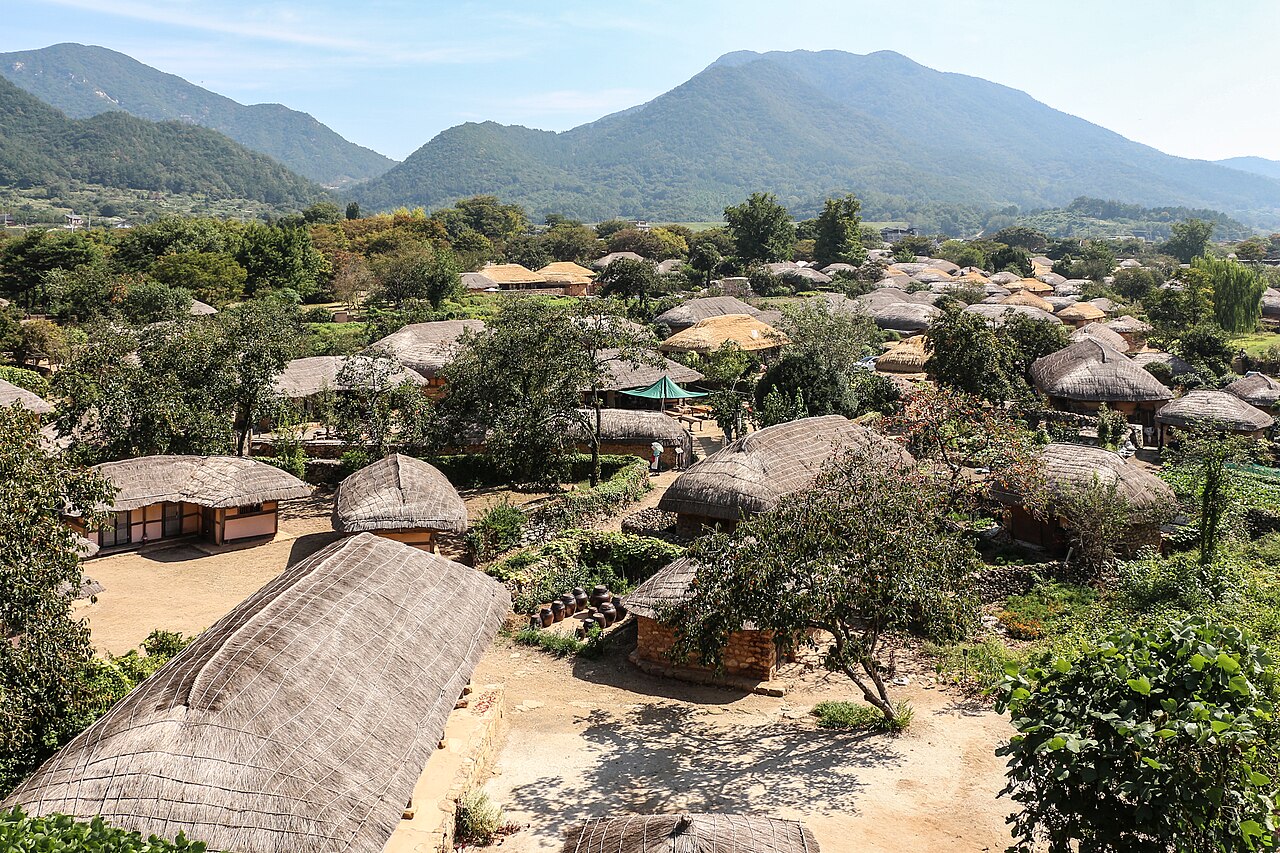
Most "traditional villages" in Korea are museums. You walk through reconstructed buildings, read plaques, and leave. Naganeupseong is different. Over 100 families — more than 200 people — still live inside a 600-year-old stone fortress, in thatched-roof houses their ancestors built during the Joseon Dynasty.
This isn't a theme park. It's a real neighborhood with real residents, wrapped in 1,410 meters of fortress wall that has stood since 1397.
Quick Info
- Cost: ₩4,000 adults (~$2.70), ₩2,500 teens, ₩1,500 children
- From Seoul: ~2 hr 40 min (KTX to Suncheon) + 45 min local bus
- Time Needed: Half day (full day if combined with Suncheon Bay Wetland)
- Crowds: Low to medium — far fewer tourists than Seoul folk villages
- English: Minimal — translation app recommended
- Open: Year-round, daily (hours vary by season)
- Best For: History lovers, Photographers, Slow travelers
- UNESCO: On the Tentative List since 2011
Why Visit Naganeupseong
1. Korea's Best-Preserved Fortress Town
During the Japanese colonial period (1910–1945), most of Korea's traditional walled towns were demolished. Naganeupseong survived. The stone fortress walls, the government offices, and the residential houses all remain largely intact — making it the most complete example of a Joseon-era eupseong (읍성, walled administrative town) in the country.
2. People Actually Live Here
This is what separates Naganeupseong from every other "folk village" in Korea. Over 100 households live inside the walls in traditional chogajip (초가집, thatched-roof houses). You'll see laundry drying on lines, vegetables growing in front yards, and elderly residents sitting on their porches. It's a living, breathing village — not a set piece.
3. A Perfect Pair with Suncheon Bay
Naganeupseong sits just 30 minutes from Suncheon Bay Wetland, a Ramsar-designated wetland and one of Korea's most important ecological sites. You can easily visit both in one day — fortress village in the morning, reed fields and migratory birds in the afternoon.
What to See
The Fortress Walls
The 1,410-meter stone wall encircles the entire village. You can walk along the top of the wall for a full loop — it takes about 45 to 60 minutes and gives you panoramic views over the thatched rooftops and surrounding countryside. This is the single best thing to do here.
Thatched-Roof Houses (Chogajip)
The village contains dozens of traditional thatched-roof houses, many dating back hundreds of years. The straw roofs are re-thatched regularly to maintain their condition. Some houses are open to visitors; others are private homes — respect the boundaries.
Nangmin Hall & Government Buildings
The Nakan Gaeksa (guest house) and Nangmin Hall are restored Joseon-era government buildings inside the walls. The small folk exhibition hall covers the village's history, daily life, and the role of the fortress in regional defense.
Traditional Craft Workshops
Several workshops operate inside the village where you can watch (and sometimes try) traditional crafts: straw weaving, blacksmithing, paper art, and natural dyeing. Schedules vary — weekends have more activity.
Lotus Pond
Near the fortress wall, the village lotus pond blooms in summer (July–August) and adds a quiet, scenic spot for photos.
Food
Inside the Village
- Jeon (Korean pancakes): Small eateries inside the walls serve pajeon (green onion pancake) and bindaetteok (mung bean pancake). ₩5,000–8,000 (~$3.50–5.50)
- Makgeolli: Pair your pancake with a bowl of traditional rice wine. ₩3,000–5,000
- Tteok (rice cakes): Vendors sell handmade rice cakes and traditional snacks near the entrance
In Suncheon
- Hanjeongsik (Korean full-course meal): Suncheon is known for Jeolla-style hanjeongsik — a table overflowing with 15–20 side dishes built around local greens and fish. ₩15,000–25,000 (~$10–17) per person
- Cockle clam bibimbap (꼬막비빔밥): The nearby town of Beolgyo (20 min by car) is famous for cockle clams. A full cockle meal costs ₩15,000–20,000 (~$10–14)
- Lotus leaf rice: A regional specialty found near temple areas in Suncheon
Getting There
From Seoul by KTX (Recommended)
- KTX: Yongsan Station → Suncheon Station (~2 hr 40 min, ~₩45,000–60,000 / ~$30–40)
- Local bus 68: Suncheon Station → Naganeupseong (~45 min, ~₩1,700 / ~$1.20)
- Total: ~3.5 hr, ~₩50,000–65,000 / ~$34–44 (one way)
From Seoul by Express Bus
- Express bus: Seoul Central City Terminal (Seocho) → Suncheon Bus Terminal (~4 hr 30 min, ~₩25,000–40,000 / ~$17–27)
- Local bus or taxi: Suncheon Terminal → Naganeupseong (~40 min by bus / ~25 min by taxi)
- Total: ~5 hr, ~₩30,000–50,000 / ~$20–34 (one way)
From Incheon Airport
- AREX to Seoul Station (~43 min) → transfer to Yongsan → KTX to Suncheon
- Total: ~4 hr, ~₩55,000–70,000 / ~$37–47 (one way)
By Car
- Seoul → Suncheon: ~3.5–4 hours via Honam Expressway
- Free parking available at the village entrance
Tip: If you're already visiting Yeosu or Boseong, Suncheon is less than an hour away by car or bus. Combine them into a 2–3 day Jeollanam-do trip.
Tips
- Hours vary by season: May–Sep 08:30–18:30, Feb–Apr & Oct 09:00–18:00, Nov–Jan 09:00–17:30. Arrive at least 1 hour before closing.
- Combine with Suncheon Bay: The wetland and ecological park are 30 minutes away. The Sky Cube monorail connects the garden and the wetland — a fun way to travel between them.
- Overnight stay: You can sleep inside the fortress in a traditional thatched-roof guesthouse. Book ahead — availability is limited. It's the most authentic hanok stay experience in Korea.
- Respect residents: Remember, people live here. Don't photograph residents without permission, stay out of clearly private areas, and keep noise levels reasonable.
- Best seasons: Spring (April–May) for mild weather and green fields. Autumn (October–November) for golden reed fields at Suncheon Bay. Summer is hot and humid.
- Download Naver Map: Google Maps is unreliable for Korean bus routes. Naver Map (available in English) gives accurate bus schedules and walking directions.
- Cash recommended: Small vendors inside the village may not accept cards. Bring ₩10,000–20,000 in cash.
- Seniors 65+: Free admission with ID
The Bottom Line
Naganeupseong is one of the few places in Korea where history isn't behind glass. The fortress walls are real. The houses are real. The people living inside them are real. It's a quiet, unhurried place that most international tourists never find — and that's exactly what makes it worth the trip.
Pair it with Suncheon Bay Wetland for a day that gives you both Korea's human heritage and its natural one. No crowds, no tourist traps, no English menus — just a 600-year-old village that's still alive.