06. Jeonju Hanok Village — 600 Traditional Houses and the Birthplace of Bibimbap
If you want to experience traditional Korean culture in a single neighborhood, Jeonju Hanok Village is it. Over 600 traditional hanok houses cluster together in the heart of Jeonju city, forming the largest and best-preserved hanok village in Korea. It's where Koreans go to feel Korean.
This isn't a museum behind glass. People live here, cook here, make paper and fans by hand here. And unlike most tourist attractions in Korea, Jeonju Hanok Village is open year-round, free to enter, and reachable in under 2 hours from Seoul by KTX.
Quick Info
- Location: Jeonju-si, Jeollabuk-do (full address: Gyo-dong & Pungnam-dong area)
- Admission: Free (village is open public area; individual attractions have separate fees)
- Best time: Year-round — spring (cherry blossoms) and autumn (foliage) are peak seasons
- From Seoul: ~1 hr 40 min by KTX, ~2 hr 40 min by express bus
- Time needed: Half day minimum, full day recommended
- Crowds: High on weekends and holidays, moderate on weekdays
- English: Moderate — major signs are bilingual, but smaller shops are Korean only
- Best for: Culture lovers, foodies, photographers, hanbok rental fans
Why Visit Jeonju Hanok Village
1. Korea's Largest Traditional Hanok Village
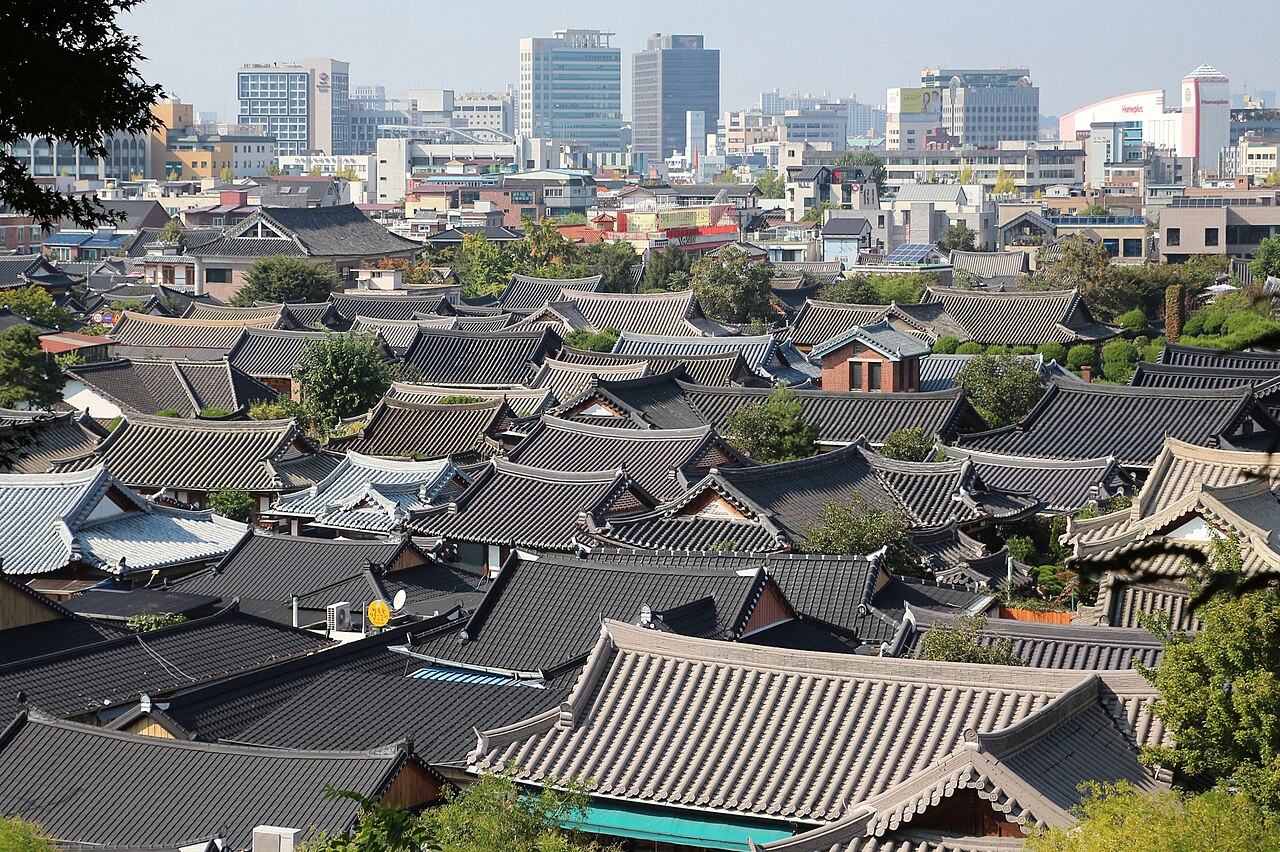
Over 600 hanok (traditional Korean houses with curved tile roofs) fill the neighborhood. Unlike reconstructed folk villages, many of these hanok are original structures dating back to the early 1900s, still lived in and maintained by residents. Walking through the narrow alleys feels like stepping back a century — except there's great Wi-Fi.
2. The Birthplace of Bibimbap
Jeonju is officially recognized as the origin city of bibimbap, Korea's most famous rice dish. The Jeonju-style bibimbap uses locally grown bean sprouts (kongnamul), sesame oil instead of gochujang on top, and a raw egg yolk. You haven't really had bibimbap until you've had it in Jeonju.
3. Living Traditional Culture
This village isn't frozen in time — it's actively producing traditional Korean crafts. Hanji (Korean handmade paper) workshops, fan-making studios, calligraphy classes, and traditional music performances happen daily. You can try most of them yourself for under $10.
4. Gateway to the Joseon Dynasty
Jeonju holds special significance as the ancestral home of the Joseon Dynasty. Gyeonggijeon Shrine, right inside the village, houses the portrait of King Taejo (Yi Seong-gye), founder of the Joseon Dynasty that ruled Korea for over 500 years. This is where Korea's last royal dynasty began.
What to Do
Gyeonggijeon Shrine (경기전)
- What: Royal shrine built in 1410 to house the portrait of King Taejo, founder of the Joseon Dynasty
- Admission: ₩3,000 adults (~$2), ₩2,000 youth, free for children under 6
- Hours: 09:00–18:00 (last entry 17:00)
- Why go: The bamboo grove behind the shrine is one of the most photographed spots in Jeonju
Hanok Life Experience
- Hanbok rental: ₩10,000–20,000 (~$7–13) for 2–4 hours — dozens of rental shops around the village entrance
- Wearing hanbok gets you free admission to Gyeonggijeon and other paid attractions
- Hanok stay: Sleep on a traditional ondol (heated floor) in a real hanok guesthouse — from ₩50,000/night (~$33)
Jeonju Hanji Museum & Workshops
- What: Museum dedicated to hanji (Korean handmade paper), with hands-on papermaking classes
- Cost: Museum free; workshops ₩5,000–15,000 (~$3–10)
- Why go: Hanji is a UNESCO-recognized craft, and Jeonju is its production center. Make your own sheet of paper to take home.
Jeonju Fan Culture Center (부채문화관)
- What: Traditional hapjukseon (bamboo folding fan) making experience
- Cost: Workshop ₩5,000–10,000 (~$3–7)
- Why go: Jeonju hapjukseon fans were once tribute items to the royal court. Paint your own fan as a souvenir.
Omokdae & Imokdae Pavilions
- What: Hillside pavilions overlooking the entire Hanok Village
- Admission: Free
- Why go: The best panoramic view of 600+ hanok rooftops. Especially stunning at sunset.
Jeondong Catholic Cathedral (전동성당)
- What: Romanesque cathedral built in 1914 on the site where Korea's first Catholic martyrs died
- Admission: Free
- Why go: One of the most beautiful churches in Korea, and a striking contrast to the hanok surrounding it
Jeonju Traditional Wine Museum
- What: Learn about and taste makgeolli (traditional Korean rice wine) and other Korean liquors
- Cost: Tasting ₩3,000–5,000 (~$2–3)
- Why go: Jeonju's makgeolli, especially the local Makgeolli Town district (Makgeolli Golmok), is legendary
Food
Jeonju is widely considered the food capital of Korea. The city was designated a UNESCO Creative City of Gastronomy in 2012 — only the second city in the world to receive this title. Here's what to eat.
Jeonju Bibimbap
The dish that made Jeonju famous. A brass bowl filled with warm rice, 30+ toppings (bean sprouts, fernbrake, spinach, radish, mushrooms, egg yolk), and sesame oil. Not the gochujang-heavy version you get elsewhere — Jeonju-style emphasizes the individual flavors of each ingredient.
- Where: Hankookjip (한국집), Gajok Hoegwan (가족회관), Seongmidang (성미당)
- Price: ₩10,000–15,000 (~$7–10) per person
Kongnamul Gukbap (Bean Sprout Soup Rice)
Jeonju's hangover soup — and a beloved everyday meal. A steaming pot of bean sprout soup with rice, topped with a raw egg that cooks in the broth. Locals eat this for breakfast.
- Where: Hyundai-ok (현대옥) and Waenji (왜냐지) near Nambu Market
- Price: ₩7,000–9,000 (~$5–6)
Choco Pie (PNB Bakery)
PNB Bakery, established in 1951, makes Jeonju's famous handmade choco pie — nothing like the mass-produced version. Rich, moist, and only available here.
- Where: PNB main branch near Pungnammun Gate
- Price: ₩2,000–3,000 (~$1.50–2) per piece
Street Food in the Village
- Hotteok: Jeonju's version is stuffed with seeds, nuts, and brown sugar. ₩2,000–3,000
- Kkochi (skewers): Grilled meat and vegetable skewers along the main walking street. ₩3,000–5,000
- Makgeolli ice cream: Rice wine-flavored soft serve. Only in Jeonju. ₩3,000–4,000
Makgeolli Golmok (Makgeolli Alley)
A street near the village where makgeolli restaurants serve unlimited side dishes (anju) with each kettle of rice wine. Order one kettle (₩4,000–5,000 / ~$3) and plates of pajeon, tofu, kimchi, and more keep coming. A uniquely Jeonju experience.
Getting There
From Seoul by KTX (Recommended)
- KTX: Yongsan Station or Suseo Station → Jeonju Station (~1 hr 40 min, ₩33,800 / ~$22)
- Bus or taxi: Jeonju Station → Hanok Village (~15 min by bus, ~10 min by taxi ₩5,000)
- Total from Seoul: ~2 hr, ~₩38,000 / ~$25 one way
From Seoul by Express Bus
- Express bus: Central City Terminal (Seocho) → Jeonju Express Bus Terminal (~2 hr 40 min, ₩15,400 / ~$10)
- Bus: Terminal → Hanok Village (~20 min, ₩1,400)
- Total: ~3 hr, ~₩17,000 / ~$11 one way
From Incheon Airport
- Airport bus: Incheon Airport → Jeonju (direct, ~3 hr 30 min, ₩25,800 / ~$17)
- Or AREX + KTX: Airport → Seoul Station (AREX, 43 min) → Jeonju (KTX, 1 hr 40 min)
- Total: ~3–4 hr depending on route
By Car
- Seoul → Jeonju: ~2 hr 30 min via Honam Expressway
- Parking: Public lots near the village entrance (₩2,000–5,000 for a few hours); weekends are packed — arrive early or use public transport
Tip: The express bus is half the price of KTX and only an hour longer. For budget travelers, it's the better choice.
Tips
Timing
- Weekdays are significantly less crowded. On weekends and holidays, the main streets can feel like rush hour. If possible, visit Tuesday through Thursday.
- Early morning (before 10:00) is the best time for photos — empty alleys, soft light, no crowds.
- Evening: Many hanok have beautiful nighttime lighting. Consider staying overnight in a hanok guesthouse to see the village after dark.
What to Bring
- Comfortable shoes: The village has uneven stone paths and slight hills. Skip the heels.
- Cash: Smaller shops and street food vendors are cash-only. ATMs are available near the village entrance.
- Naver Map app: Google Maps works poorly in Korea. Naver Map has accurate walking directions and business info.
Hanbok Tips
- Rent early: Shops open at 09:00–10:00. Go early to get the best selection and avoid lines.
- Free perks: Wearing hanbok gets you free admission to Gyeonggijeon Shrine and photo ops at special spots.
- Don't be shy: Koreans of all ages wear hanbok here. It's completely normal and encouraged.
Seasonal Highlights
- Spring (April–May): Cherry blossoms along Jeonjucheon Stream, mild weather, vibrant green
- Summer (July–August): Hot and humid, but fewer tourists. Festival season (Jeonju International Film Festival is in April/May though)
- Autumn (October–November): Red and gold foliage over hanok rooftops — the most photogenic season
- Winter (December–February): Quiet, cold, but the ondol-heated hanok stays are at their coziest
Budget
- Day trip from Seoul (budget): ₩50,000–70,000 (~$33–46) — express bus + bibimbap + street food + hanbok rental
- Day trip from Seoul (KTX): ₩90,000–120,000 (~$60–80) — KTX + bibimbap + experiences
- Overnight with hanok stay: Add ₩50,000–100,000 (~$33–66) for accommodation
The Bottom Line
Jeonju Hanok Village is the single best place in Korea to experience traditional culture, food, and architecture in one walkable neighborhood. It's free to enter, easy to reach, and open every day of the year.
For first-time visitors to Korea, Jeonju is the perfect day trip or overnight escape from Seoul. For returning visitors, it's a reminder of why you fell in love with Korea in the first place.
Put on a hanbok, eat bibimbap where it was invented, watch a hanji artisan make paper by hand, and walk through 600 years of Korean history. That's Jeonju.