13. WYD 2027 Seoul — What to Expect When a Million Pilgrims Come to Korea
In August 2023, Pope Francis stood before a crowd of 1.5 million in Lisbon and said the next World Youth Day would move "from the western edge of Europe toward the Far East." The destination: Seoul, South Korea.
WYD 2027 will be the first World Youth Day held in East Asia, and the first in a country where Christians are a minority. Between 700,000 and a million young pilgrims are expected to converge on a city that already moves 8 million commuters a day through one of the world's most advanced transit systems. It will also be the first WYD under Pope Leo XIV, who took the papal throne in May 2025.
This article is the overview — the big picture of what WYD 2027 is, why Seoul, and what you need to know if you're thinking about going.
Quick Info
- Event: World Youth Day 2027 (WYD Seoul)
- Theme: "Take courage! I have overcome the world" (John 16:33)
- Days in the Dioceses: July 29 – August 2, 2027 (15 dioceses across Korea)
- Main Event: August 3 – 8, 2027 (Seoul)
- Total Duration: 11 days (July 29 – August 8)
- Expected Attendance: 700,000 – 1,000,000 pilgrims
- Cost: Participation is free; pilgrim packages available for accommodation
- Registration: Not yet open (expected late 2026)
- Official Website: wydseoul.org
- Pope: Leo XIV (expected to preside over closing events)
What Is World Youth Day
World Youth Day is the largest regular gathering of young people on earth. Started by Pope John Paul II in 1985, it brings Catholic youth from every continent together for a week of prayer, catechesis, cultural exchange, and one very large outdoor Mass. Past editions have drawn up to 3.9 million people (Manila 1995) and regularly exceed half a million.
Despite the name, WYD is not a single day — it's an 11-day program that begins with smaller gatherings in local dioceses across the host country before the main event in the host city. It happens roughly every three years, rotating between continents.
WYD is open to everyone, regardless of religion. You don't need to be Catholic or even Christian to attend.
Why Korea
Korea's Catholic story is unlike any other in the world. In 1784, a Korean nobleman named Yi Seung-hun traveled to Beijing on a diplomatic mission, encountered Catholic texts, was baptized, and returned home to spread the faith — entirely without foreign missionaries. Korea is the only country in history that evangelized itself.
That early community paid an extraordinary price. Between 8,000 and 10,000 Korean Christians were killed during the 19th-century persecutions. In 1984, Pope John Paul II canonized 103 Korean Martyrs during his first visit to Seoul. In 2014, Pope Francis returned and beatified 124 more at Gwanghwamun Plaza, the same square where many of them had been executed.
Today, South Korea has about 5.8 million Catholics — roughly 11% of the population. It is one of the few countries in Asia where Catholicism is growing. The choice of Seoul signals the Church's pivot toward Asia and its recognition of Korea's singular place in Catholic history.
The Schedule
Days in the Dioceses (July 29 – August 2)
Before the main event, pilgrims are assigned to one of 15 dioceses outside Seoul for five days. You stay with Korean host families, attend parish-based programs, and experience Korean Catholic life outside the capital. This is often the most memorable part of WYD — a chance to connect with a local community in a way that a mega-event in Seoul cannot replicate.
Main Event in Seoul (August 3 – 8)
- August 3 (Tuesday): Opening Mass, presided by the Archbishop of Seoul. Youth Festival begins — cultural performances, K-culture experiences, and activities across the city.
- August 4–6 (Wednesday–Friday): Catechesis, confessions, etc.
- August 5 (Thursday): Papal Welcome Ceremony — pilgrims gather to welcome the Holy Father.
- August 8 (Sunday): Closing Mass — the Pope celebrates the final Mass, expected to draw the largest crowd. The next WYD host city is announced.
The Theme
"Take courage! I have overcome the world" (John 16:33). Announced in September 2024, the theme speaks directly to the Korean martyrs' legacy of faith under persecution, and to the challenges facing young people in a hypercompetitive society where Korea's youth face extreme academic and career pressure.
The WYD 2027 logo reflects this: a cross formed by two brushstrokes — red for martyrdom, blue for the energy of youth — with the Korean letter ieung (the circle shape) at the center. "Seoul" is written in Hangul calligraphy that weaves the letters W, Y, and D into the design.
Pope Leo XIV and WYD Seoul
WYD 2027 will be the first World Youth Day under Pope Leo XIV (Robert Francis Prevost), who was elected in May 2025. If he attends — as is traditional for the Pope — it will be the fourth papal visit to South Korea, following John Paul II in 1984 and 1989, and Francis in 2014.
Diplomatic preparations are already underway. Korean President Lee Jae-myung has expressed interest in meeting the Pope at the Vatican ahead of WYD, and has proposed that Pope Leo XIV consider a visit to North Korea during his Korean Peninsula trip — a prospect that would carry enormous symbolic weight.
What Korea Is Doing to Prepare
Korea is not leaving this to chance. In March 2026, the National Assembly passed the International Cultural Event Support Act, providing a legal framework for government coordination of WYD logistics — safety, transportation, visa facilitation, and inter-agency support. A cross-party parliamentary committee of 57 Catholic lawmakers was formed to oversee preparations.
The total budget is estimated at approximately 300 billion won (~US$200 million), with about 50 billion won (~US$34 million) allocated from public funds specifically for public safety infrastructure — not Church activities.
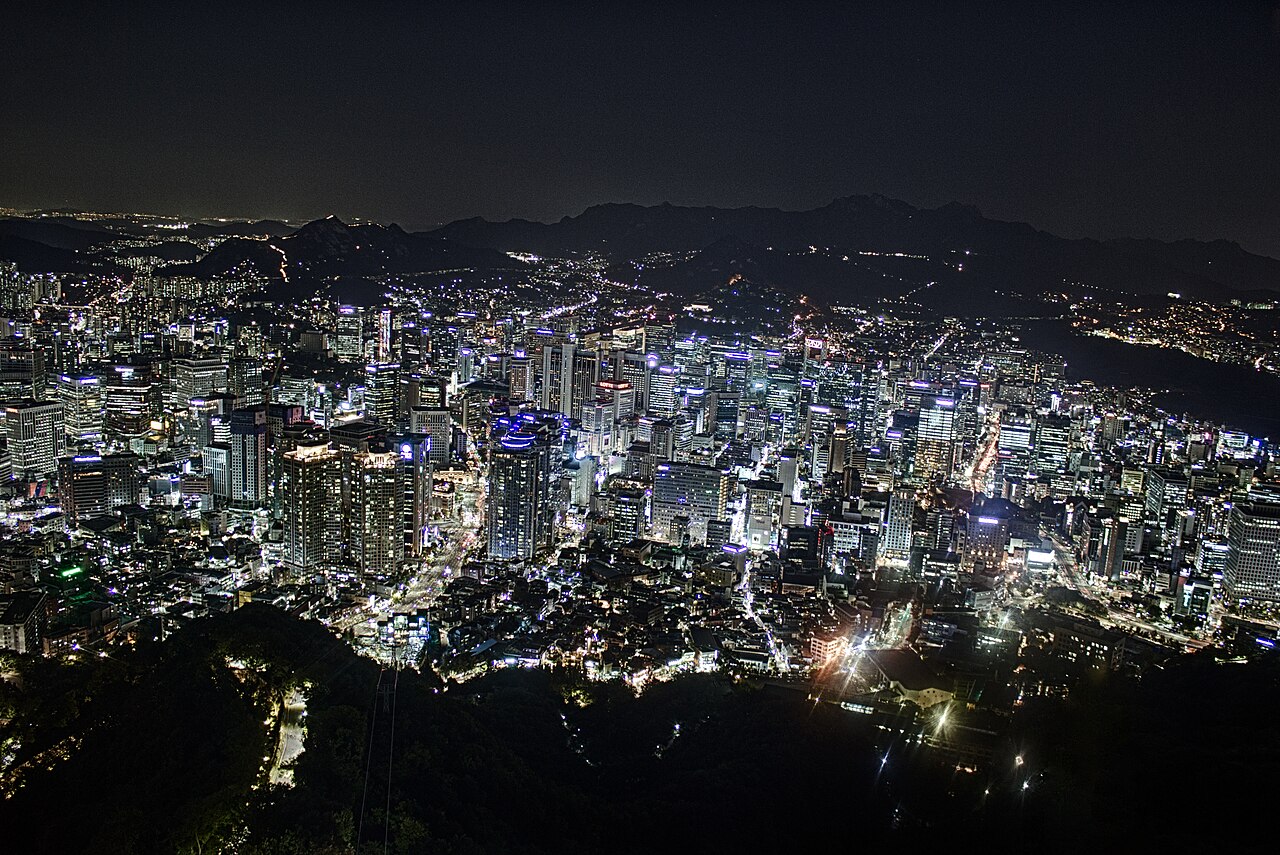
Seoul's transit system is already world-class — 23 metro lines, over 700 stations, thousands of buses — but major upgrades are completing in time for 2027. The GTX express corridors (a US$13.5 billion investment) and a new high-speed rail line from Gimcheon to Geoje will expand capacity. Incheon International Airport, consistently ranked among the world's best, will serve as the primary arrival point for international pilgrims.
Korea's Unique Angle
No previous WYD has been held in a country with this combination of factors:
- Christian minority: Catholics are 11% of the population in a multi-religious society (Buddhism, Protestantism, shamanism). Interreligious dialogue is a stated focus of WYD 2027.
- K-culture magnetism: Organizers expect many attendees, Catholic and non-Catholic, drawn by Korea's global cultural influence — K-pop, K-drama, Korean cuisine, K-beauty. The official WYD website has a dedicated K-Culture section.
- Technological infrastructure: Korea's digital infrastructure (5G, contactless payments, real-time translation apps) will make this the most connected WYD ever.
- Ecological focus: Over 700 trees have been planted for carbon offset as part of an environmental stewardship program running through 2027.
- Self-evangelized history: The martyrdom sites pilgrims will visit are not relics of colonial mission work — they are places where Koreans chose faith and died for it on their own terms.
Practical Considerations
- Registration: Not yet open. Expected to launch in late 2026 through wydseoul.org. Most pilgrims register through their diocese for group packages (accommodation, meals, transport, pilgrim kit). Individual registration will also be available.
- Cost: The WYD events themselves (catechesis, vigil, closing Mass) are free. Pilgrim packages covering accommodation, meals, and transport typically cost US$100–350 based on past WYDs. Commercial hotel packages from tour operators are also available.
- Visa: Many nationalities can enter Korea visa-free for 90 days. For those requiring a visa, the new legislation includes provisions for streamlined processing for WYD participants. See our detailed visa guide.
- Weather: August in Seoul is hot (30–35 degrees C) and humid, with monsoon rain possible. Pack light, breathable clothing, rain gear, sunscreen, and a hat.
- Language: English signage is widespread in Seoul. Naver Map and Papago (real-time translation) are essential apps. WYD events will have multilingual interpretation.
- Accommodation: Options include host families (during Days in the Dioceses), parish-based housing in Seoul, retreat centers, converted school buildings, and commercial hotels.
- Getting to Seoul: Incheon International Airport (ICN) is the main gateway, with direct flights from most major cities worldwide. KTX high-speed rail connects Seoul to all major Korean cities.
The Bottom Line
WYD 2027 Seoul is not just another edition of a recurring event. It is the first WYD in East Asia, the first in a Christian-minority country, and the first under a new Pope. It is coming to the only nation on earth that built its own Church without missionaries — and then defended it with the blood of thousands.
Korea is preparing at the national level, with new legislation, a multi-hundred-million-dollar budget, and infrastructure upgrades. Seoul's existing transit and technology infrastructure makes it arguably the most logistically capable WYD host city in history.
If you are between 18 and 35 and have ever considered a WYD, Seoul 2027 is the one. Registration is expected to open in late 2026. Start talking to your diocese now.