08. Seoul Martyrs' Pilgrimage Trail — Walk Where 10,000 Gave Their Lives
Korea has the largest martyrdom history in all of Asia. Between 1791 and 1888, over 10,000 Korean Catholics were executed across five waves of persecution — and 103 of them were canonized as saints by Pope John Paul II in 1984. Today, the places where they prayed, were imprisoned, and died form a walking trail through the heart of Seoul.
In 2018, the Vatican officially recognized Seoul's Catholic Pilgrimage Route as an international pilgrimage site — the first in Asia. Whether you're a Catholic pilgrim, a history lover, or just someone who wants to walk Seoul's quieter side, this trail is one of the most meaningful things you can do in the city.
Quick Info
- Trail: Seoul Catholic Pilgrimage Route (서울 순례길)
- Total distance: 44.1 km across 3 courses
- Walking time: 2–3 hours per course
- Difficulty: Easy — flat urban paths, well-marked
- Cost: Free (all sites have free admission)
- Vatican status: Asia's first official international pilgrimage site (2018)
- Key sites: Seosomun Shrine, Jeoldusan Shrine, Myeongdong Cathedral, Yakhyeon Church
- Best for: Catholic pilgrims, history buffs, architecture fans, quiet walkers
Why This Trail Matters
Catholicism arrived in Korea not through missionaries, but through Korean scholars who discovered Catholic texts in Beijing in the 1780s and converted themselves. When the new faith spread — with its radical ideas of equality across social classes — the Confucian establishment saw it as a direct threat to the state. The persecutions that followed lasted nearly a century.
What makes this story extraordinary is how the faith survived. With almost no foreign priests (most were captured and executed), Korean laypeople kept Catholicism alive through secret gatherings, hidden villages in the mountains, and an underground network that stretched across the peninsula. Today, about 11% of South Korea's population is Catholic — roughly 5.8 million people — making it one of the largest Catholic communities in Asia.
Key Sites
Seosomun Martyrs' Shrine (서소문순교성지)
This is where it all happened. Seosomun — literally "Small West Gate" — was Joseon-era Seoul's public execution ground. 44 of the 103 canonized Korean saints were killed here, more than at any other single location. Between 1801 and 1866, hundreds of Catholics were beheaded at this site.
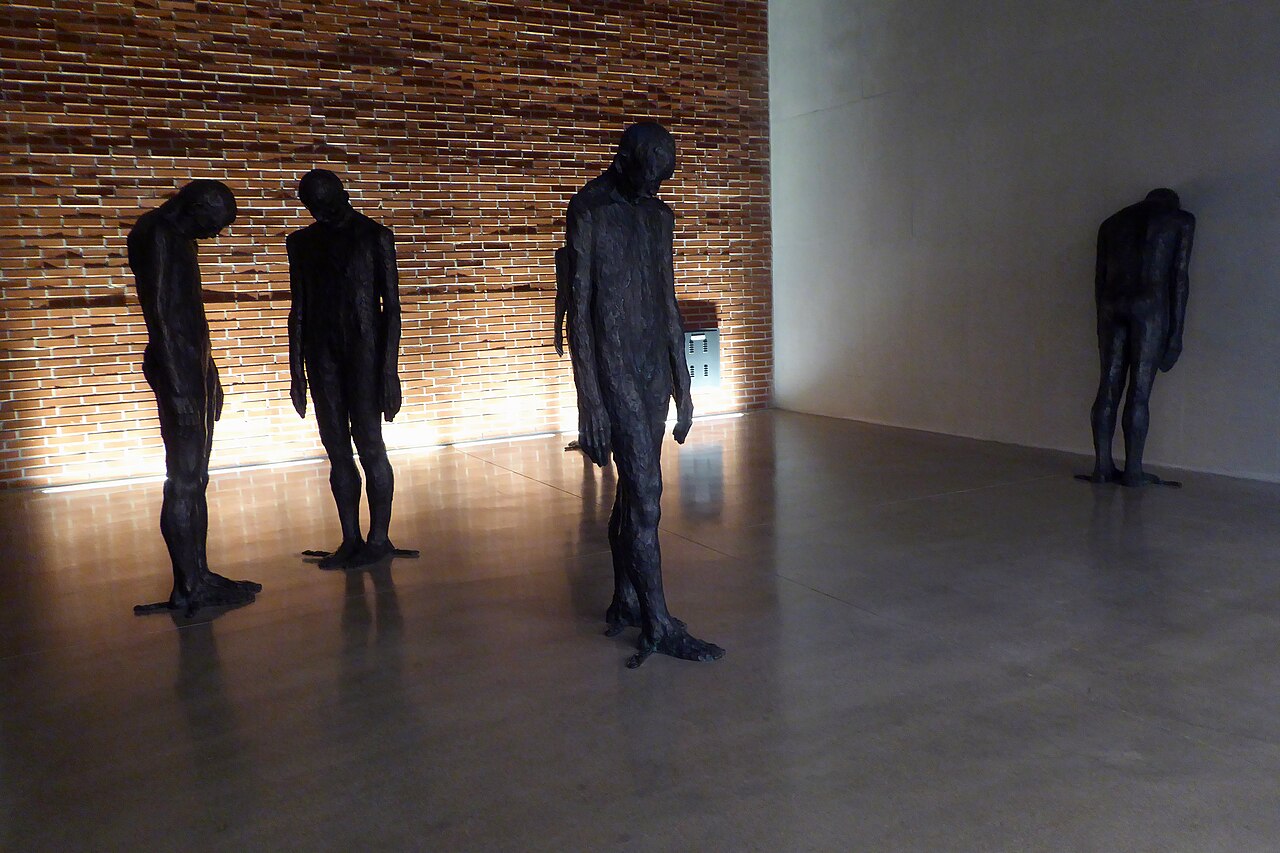
In 2019, the site was transformed into the Seosomun Shrine History Museum, a stunning underground memorial designed by architect Bosuk Hur. The museum descends several stories below Seosomun Historical Park, creating a contemplative space of concrete, light, and silence. It is widely considered one of the finest pieces of religious architecture in Asia.
- Address: 5 Chilpae-ro, Jung-gu, Seoul
- Hours: Tue, Thu–Sun 9:30–17:30 / Wed 9:30–20:30 / Closed Mon
- Admission: Free
- Subway: Chungjeongno Station (Line 2/5), Exit 4
Jeoldusan Martyrs' Shrine (절두산순교성지)
Jeoldusan means "Beheading Hill." The name tells you everything. This cliff overlooking the Han River was where up to 2,000 Catholics were executed in 1866 during the Byeongin Persecution — many thrown off the cliff into the river below.
The Catholic Church acquired the site in 1956 and built a shrine, museum, and chapel in 1967, marking the 100th anniversary of the persecution. The Korean Catholic Martyrs' Museum here houses relics, personal belongings, and documents from the persecution era. Pope John Paul II visited this site first during his historic 1984 trip to Korea.
- Address: 6 Tojeong-ro 6-gil, Mapo-gu, Seoul
- Hours: Tue–Sun 9:30–17:00 / Closed Mon
- Admission: Free
- Subway: Hapjeong Station (Line 2/6), Exit 7
Myeongdong Cathedral (명동대성당)
Completed in 1898, Myeongdong Cathedral was the first Gothic-style building ever constructed in Korea and the tallest structure in Seoul at the time. It remains the seat of the Archdiocese of Seoul and the symbolic center of Korean Catholicism.
The red-brick cathedral was designed by French priest Eugene Coste and built with funding from the Paris Foreign Missions Society. Beneath the main cathedral lies an underground chapel where the remains of several martyrs are enshrined.
- Address: 74 Myeongdong-gil, Jung-gu, Seoul
- Hours: Tue–Sun 9:30–18:00 (open for prayer 6:00–22:00 daily)
- Admission: Free
- Subway: Myeongdong Station (Line 4), Exit 8
Yakhyeon Catholic Church (약현성당)
Built in 1892, Yakhyeon is the oldest Western-style building in Korea — predating Myeongdong Cathedral by six years. Named after Yakjeonhyeon ("Hill of Medicinal Herbs"), this small cruciform church was the first Catholic parish church in Seoul.
It sits just a short walk from Seosomun, and the two sites are deeply connected: the church was intentionally built near the execution ground to honor those who died there. It is a designated Historic Site of South Korea.
- Address: 447-1 Jungnim-dong, Jung-gu, Seoul
- Hours: Daily 9:00–18:00
- Admission: Free
- Subway: Chungjeongno Station (Line 2/5), Exit 4
Walking Routes
The official Seoul Pilgrimage Route is divided into three courses, each walkable in 2–3 hours. Free guided commentary tours are available through the Seoul Metropolitan Government (reservation required). All courses are on flat, paved urban paths.
Course 1: Seosomun Route (4.5 km, ~3 hours)
Starts at Myeongdong Cathedral and passes through Seoul Anglican Cathedral and the Seoul Museum of Art before ending at Seosomun Martyrs' Shrine. This is the most popular course and the best introduction to the trail.
Course 2: Bukchon Route (3 km, ~2 hours)
Begins at the Gwanghwamun Beatification Site (where the 124 Blesseds were beatified) and weaves through Jogyesa Temple, Insadong, Unhyeongung Palace, and Gahoe-dong Catholic Church. This route blends Catholic history with traditional Korean culture.
Course 3: Hangang Route (4 km, ~2.5 hours)
Starts at Mapo Station and follows a quiet path along the Han River to Jeoldusan Martyrs' Shrine, ending at Yanghwajin Foreign Missionary Cemetery — where many of the early foreign missionaries who served Korea are buried.
You don't have to walk all three courses in one day. Each stands on its own. If you only have time for one, start with the Seosomun Route.
Getting There
All major sites are directly accessible by Seoul's subway system:
- Seosomun Shrine & Yakhyeon Church: Line 2/5, Chungjeongno Station, Exit 4 (5-min walk)
- Myeongdong Cathedral: Line 4, Myeongdong Station, Exit 8 (10-min walk uphill)
- Jeoldusan Shrine: Line 2/6, Hapjeong Station, Exit 7 (10-min walk)
- Yanghwajin Cemetery: Line 2/6, Hapjeong Station, Exit 7 (15-min walk)
All sites are in central Seoul. A taxi between any two sites costs 5,000–10,000 KRW (~$4–8 USD). If you walk the full Seosomun Route from Myeongdong Cathedral to Seosomun Shrine, you'll pass through some of Seoul's most historic neighborhoods.
Tips
- Start at Seosomun. The underground museum is the emotional and architectural highlight of the entire trail. Arrive when it opens to avoid crowds.
- Dress respectfully. These are active places of worship. Shoulders and knees should be covered when entering churches and shrines.
- Wednesday evenings at Seosomun. The museum stays open until 20:30 on Wednesdays — the underground space at dusk is especially powerful.
- Combine with Myeongdong shopping. Myeongdong Cathedral sits directly above Seoul's biggest shopping district. Walk the pilgrimage in the morning, shop in the afternoon.
- WYD 2027 visitors: If you're coming for World Youth Day (August 3–8, 2027), plan at least one full day for this trail. These are the places where the faith you're celebrating was born and defended — not in Rome, not in Europe, but right here in Seoul.
- Photography. All sites allow photography in outdoor areas. Inside the Seosomun underground museum and church interiors, be discreet and silent — no flash.
- Bring water. The routes are urban but there are stretches without convenience stores, especially along the Hangang Route.
The Bottom Line
Seoul is not the first city most people think of when they hear "pilgrimage." But this trail — through execution grounds turned into shrines, cliff-top memorials, Asia's first Gothic cathedral, and Korea's oldest church — tells a story that rivals Santiago, Rome, or the Holy Land.
The difference? This story is only 200 years old. The blood is still fresh in the national memory. And the faith that nearly 10,000 people died for is now woven into the fabric of modern Korea.
Walk the trail. It will change how you see Seoul.