10. Father Choi Yang-up Pilgrimage — The "Martyr of Sweat" Who Walked 2,800 km a Year
Korea's second Catholic priest walked 2,800 km every year visiting 127 secret Catholic villages hidden in the mountains — while being hunted. He died of exhaustion at age 40. They call him the "Martyr of Sweat."
On March 26, 2026, the Vatican confirmed that a miraculous healing attributed to Father Thomas Choi Yang-up is scientifically inexplicable. He is now one step from beatification — and the two pilgrimage sites tied to his life are among the most meaningful Catholic destinations in Korea.
Quick Info
- Sites: Baeti Holy Site (pastoral site, key pilgrimage site) + Baeron Holy Site (death site & tomb)
- Province: Chungcheongbuk-do (central Korea)
- Cost: Free admission at both sites
- From Seoul: ~2 hr to Baeti, ~2.5 hr to Baeron (by car)
- Time needed: Half day per site, or full day for both
- Crowds: Low — these are quiet, contemplative sites
- English: Very limited — bring a translation app
- Best for: Catholic pilgrims, history buffs, quiet nature walkers
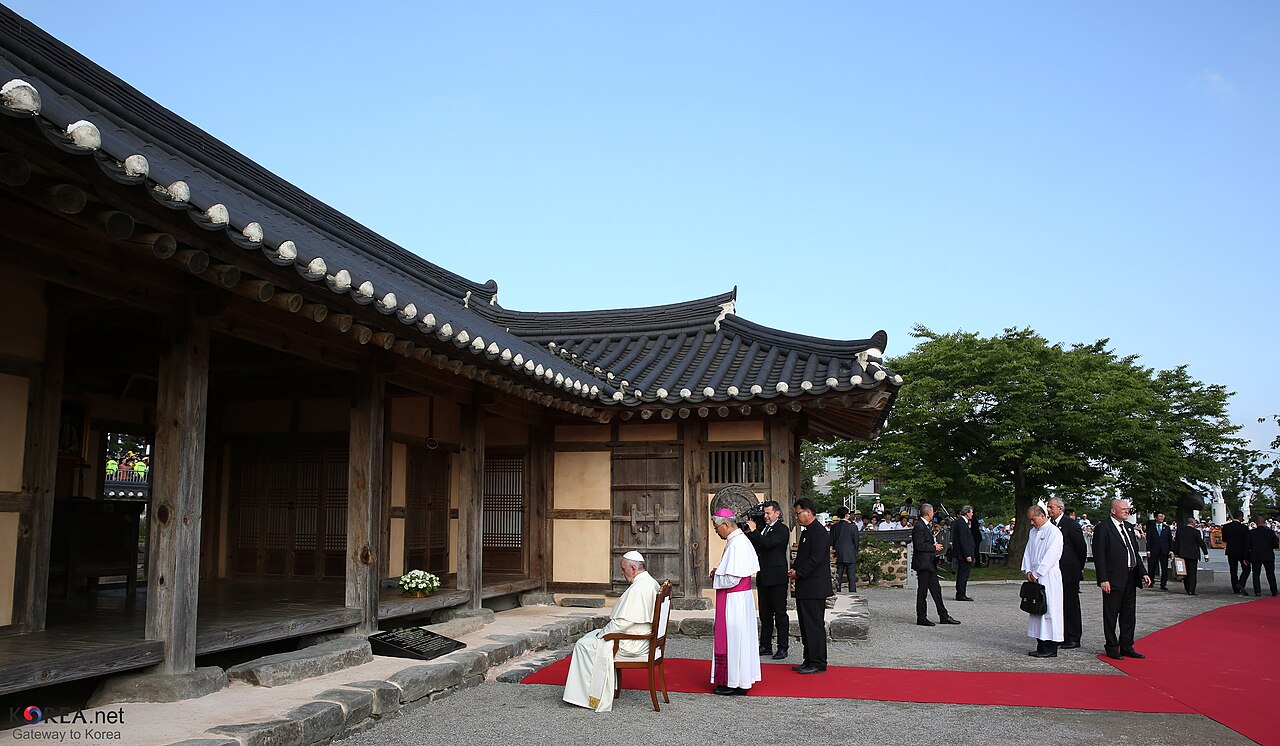
Why This Pilgrimage Matters
Thomas Choi Yang-up (1821–1861) was born in Chungcheong Province into a family that would become one of the most remarkable in Korean Catholic history. His father Francis Choi Gyeong-hwan was later canonized as a saint. His mother Lee Seong-rye was declared Blessed.
At age 15, Choi was selected alongside the future St. Andrew Kim Taegon to train as a priest abroad. He walked across the border into China and spent 13 years in seminaries in Macau and Manila before being ordained in Shanghai in 1849.
When he returned, Korea was in the grip of one of the deadliest anti-Catholic persecutions in Asian history. For the next 11 years and 6 months, Father Choi walked. He visited 127 Catholic villages scattered across the Korean mountains, covering approximately 7,000 ri (2,800 km) every year on foot — the distance from London to Istanbul, through mountain terrain, while being hunted.
He personally ministered to 3,800 believers, distributed Korean-language catechisms he translated himself, and wrote Latin letters to the Paris Foreign Missions Society that are now among the most important primary sources for 19th-century Korean Catholicism. An English translation was published in 2023.
On June 15, 1861, he died at Baeron of typhoid fever compounded by extreme exhaustion. He was 40. Unlike Korea's 103 canonized saints who were executed, Choi was not a martyr in the traditional sense. The Korean Church calls his life of extreme self-sacrifice a different kind of martyrdom — a "martyrdom of sweat."
What's Happening Now
On March 31, 2026, the Korean Catholic Bishops' Conference announced that the Vatican's medical panel confirmed a miraculous healing attributed to Father Choi's intercession as "scientifically inexplicable." This is the second attempt — the first case was rejected in 2021 for insufficient evidence.
Two stages remain: a theology committee review and a Cardinals/Bishops meeting. If both pass, Father Choi becomes Blessed — one step below sainthood. Many hope the timing will align with WYD 2027 in Seoul (August 3–8, 2027).
Key milestones:
- 2001: Beatification cause officially opened
- 2003: Declared "Servant of God"
- 2016: Pope Francis declared him Venerable — first Korean non-martyr confessor
- 2021: First miracle case rejected by Vatican medical panel
- 2026: Second miracle case approved (current stage)
Places to Visit
Baeti Holy Site (pastoral site, key pilgrimage site) — Jincheon, Chungcheongbuk-do
Baeti means "pear tree hill," and the surrounding area was a Catholic village community. It was also Father Choi's pastoral territory. The site has been preserved as a pilgrimage site with a museum dedicated to his life, a memorial church, and walking trails through the surrounding hills. The diocese held a special celebration here in March 2026 for his 205th birth anniversary.
- Address: Baeti-gil, Iwol-myeon, Jincheon-gun, Chungcheongbuk-do
- Hours: Open daily, daylight hours (museum 9:00–17:00)
- Admission: Free
- What to see: Museum, memorial church, mountain walking trails, family homestead site
Baeron Holy Site (death site & tomb) — Jecheon, Chungcheongbuk-do
Where Father Choi died in 1861 and where Korea's first Catholic seminary (St. Joseph's Seminary) was established in 1855. The site includes his tomb, a memorial chapel, and forest walking paths. It is also a stop on the "Hope Pilgrimage" route organized by Wonju Diocese.
- Address: Baeron-gil, Bongyang-eup, Jecheon-si, Chungcheongbuk-do
- Hours: Open daily, daylight hours
- Admission: Free
- What to see: Tomb, memorial chapel, St. Joseph Seminary ruins, forest paths
Seoul Pilgrimage Trail (complementary)
While not directly tied to Father Choi, the Seoul Martyrs' Pilgrimage Trail tells the broader story of Korean Catholic persecution — the same world Father Choi lived and served in. The Seosomun Shrine and Jeoldusan Shrine both cover the persecution eras he witnessed.
Getting There
To Baeti Holy Site
- By car from Seoul: ~2 hours via Jungbu Expressway. Free parking on site.
- By bus: Seoul → Jincheon Bus Terminal (~1 hr 30 min, express bus from Dong Seoul Terminal), then local bus to Baeti (~30 min).
To Baeron Holy Site
- By car from Seoul: ~2.5 hours via Jungang Expressway. Free parking on site.
- By bus: Seoul → Jecheon Bus Terminal (~2 hr, express bus from Dong Seoul Terminal), then local bus (~40 min).
- From Baeti: ~1.5 hours by car. Visiting both in one day is possible with a car.
Both sites are in rural Chungcheongbuk-do. A rental car or private transport is strongly recommended — local bus connections are infrequent.
Tips
- Combine both sites in one day. Start at Baeti (pastoral site, key pilgrimage site) in the morning, drive to Baeron (tomb) after lunch. Both are in the same province, about 1.5 hours apart.
- Dress for walking. Both sites have forest and mountain trails. Comfortable shoes and weather-appropriate clothing are essential.
- Bring water and snacks. These are rural pilgrimage sites, not tourist hubs. Jincheon and Jecheon towns have full services.
- Language. Almost no English signage at either site. Download Naver Map and a translation app before you go.
- WYD 2027 visitors: If you're attending World Youth Day in Seoul (August 3–8, 2027), plan a day trip to these sites. If beatification happens before or during WYD, expect special pilgrimage programs to be organized.
- Quiet, contemplative atmosphere. These are active places of prayer. Keep voices low and dress respectfully.
- Best season: Spring (April–May) and autumn (October–November) offer the best weather and scenery for the walking trails.
The Bottom Line
Korea's Catholic story is usually told through its martyrs — the thousands who were beheaded, drowned, or burned for their faith. Father Choi Yang-up offers a different chapter: a man who survived the persecutions not by hiding, but by walking into them, village by village, mountain by mountain, year after year, until his body gave out.
But for the Korean Church — and for the millions of Catholics who will gather in Seoul for WYD 2027 — the "Martyr of Sweat" is closer than ever to being recognized for what he was: a man who gave everything, one step at a time.
Baeti and Baeron are quiet, free, and deeply moving. They are not on any tourist map — and that is exactly why they are worth the trip.