24. Suwon Hwaseong Cultural Festival — A Fortress Built Out of Grief, and the Parade That Walks It Every Autumn
Most fortresses in the world were built because someone was afraid. Suwon Hwaseong was built because a king could not stop thinking about his father. In 1789 King Jeongjo, the twenty-second ruler of the Joseon dynasty, moved his father's tomb to Suwon. His father, Crown Prince Sado, had died in 1762, sealed inside a rice chest on the order of his own father. Jeongjo was ten years old at the time. As king, he built a walled city beside the new tomb and went there again and again.
The walls are still standing, and they are a UNESCO World Heritage Site. Once a year, in October, Suwon puts the whole story back on its feet: people in Joseon costume and ordinary participants walk the king's route from Seoul to Suwon, the fortress gates open at night, and the palace grounds fill with performances. The 2026 edition runs October 4 to 11, and getting in costs nothing.
Quick Info
- Dates: October 4–11, 2026
- Royal parade: Sunday, October 4 — the festival's opening day. This is the one date to plan around
- Hours: Individual programs vary; performance programming generally runs 12:00 to 21:00, and the night events are the ones worth staying for
- Venue: Hwaseong Haenggung Plaza and the fortress grounds — 825 Jeongjo-ro, Paldal-gu, Suwon-si, Gyeonggi-do
- Cost: Free. A few programs require advance reservation and charge a fee
- Host: Suwon City, with the Suwon Hwaseong Cultural Festival Promotion Committee and the Suwon Cultural Foundation
- From Seoul: Suwon Station on Seoul Subway Line 1 (also the Bundang Line), then a local bus or a short taxi ride to the palace
- Fortress admission outside the festival: Hwaseong Haenggung is 2,000 won for adults, 1,500 won for youth, 1,000 won for children. A combined ticket covering the palace, the Suwon Hwaseong Museum and the Suwon Museum is 4,000 won for an adult
- Free entry to the palace: Anyone wearing hanbok, visitors aged 65 and over, children under 6, and visitors with disabilities. Also the last Wednesday of each month
- Annual: Yes — every October
- Best For: Travelers who want a real historical site rather than a stage set, anyone with one spare day out of Seoul, photographers who like night architecture
In One Line
A free festival running October 4 to 11 inside a UNESCO fortress an hour from Seoul, built around the largest royal procession reenactment in Korea, where the historical route is not a theme park loop but the actual road a king actually walked.
Why This Festival
Korea has a lot of festivals that borrow a historical costume for the weekend. This one has the opposite relationship with its history: the event exists because the site does, and the site is unusually well documented. The 1795 procession that the festival reenacts was recorded in an official illustrated record, the Wonhaeng Eulmyo Jeongni Uigwe, down to the order of the ranks and the layout of the pontoon bridge across the Han River. When Suwon rebuilds the parade, it is working from a manual, not from imagination.
That 1795 journey was itself a family occasion. Jeongjo's mother, Lady Hyegyeong, was turning sixty, and the king took her to the tomb of the husband she had lost more than thirty years earlier. The trip lasted eight days. It is one of the very few state ceremonies in Korean history that reads, at its centre, as a personal act.
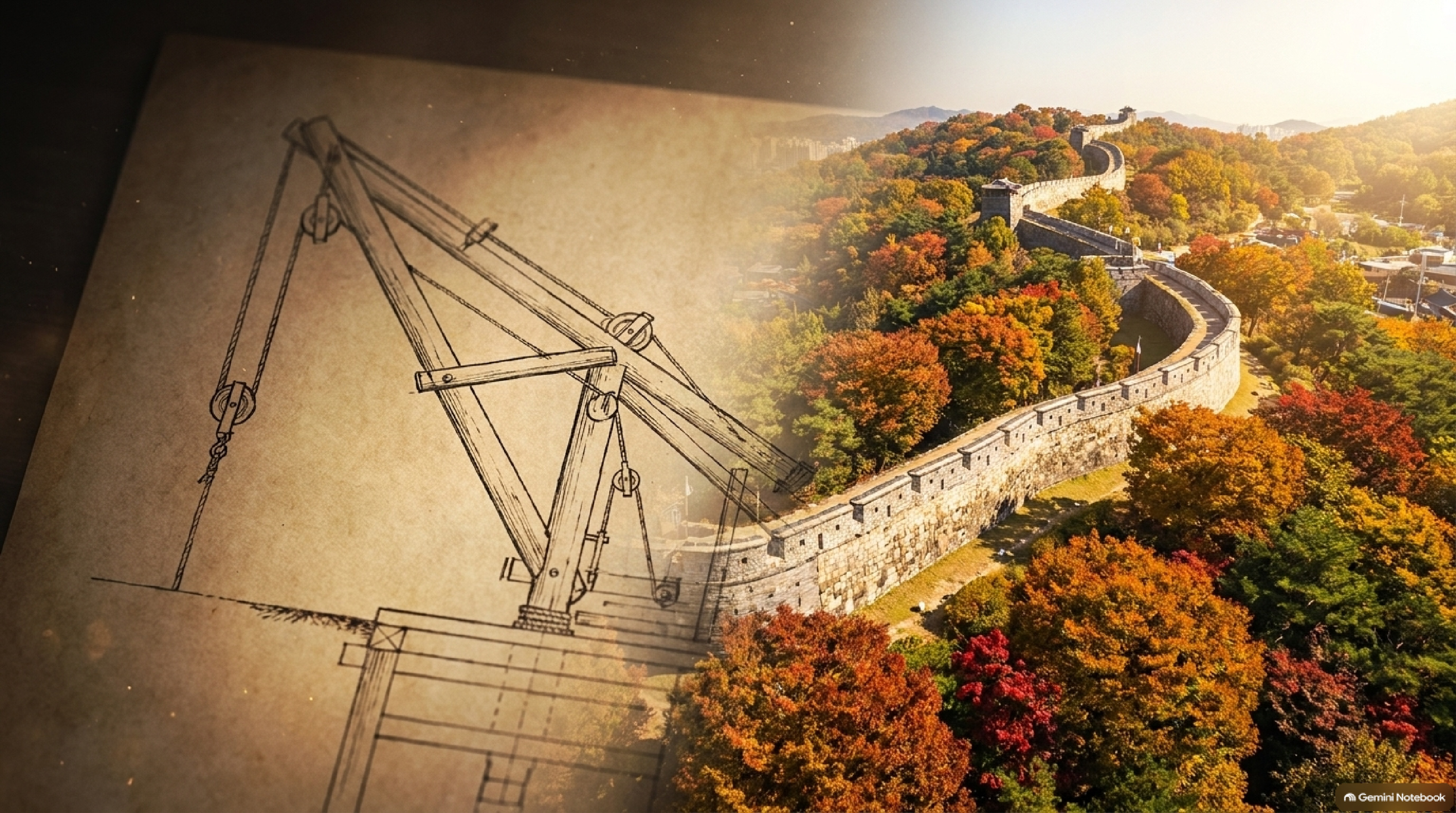
The fortress they were walking toward is worth the trip on its own. Built between 1794 and 1796 and inscribed by UNESCO in 1997, Hwaseong runs 5.74 kilometres around the old city and encloses 130 hectares. It was designed by Jeong Yak-yong, a scholar of the Silhak practical learning school, who invented a lifting crane called the geojunggi that let one man raise stones weighing up to 240 kilograms. The walls climb a hill, drop to a stream, and pass through four great gates and a floodgate built over the water. You can walk the full circuit, and during the festival the walls are lit at night.
What to See and Do
The King Jeongjo Royal Parade. This is the centrepiece, and it runs on Sunday, October 4 — the opening day. The reenactment is staged jointly by Seoul, Suwon and Hwaseong City, each covering its own stretch of the historical route: the Seoul segment from 08:20 to 18:00, the Suwon segment from 09:00 to 21:00, and the Hwaseong segment from 10:30 to 13:30. Pick your segment by where you are staying rather than trying to follow the whole thing. In Suwon the parade comes through Janganmun, the north gate, and ends at the palace. It is the largest royal procession reenactment staged anywhere in Korea.
Suwon Fantasy: Yajo. A night performance built on the old military drill that Jeongjo's troops performed by torchlight at the fortress. It is the program that uses the walls best.
Seonyumong. A water performance staged on the pond at Yongyeon, just outside the northeast corner of the fortress. Reflections do most of the work.
Time Travel: Haenggung Night Story. The temporary palace after dark, which is a different building from the one you see at noon.
Hands-on programs. The festival runs participatory programs each year, including a citizens' painting bureau and a fortress-building playground for children. These are the ones that fill up and require advance booking.
Getting There
Suwon Station is the anchor. It is on Seoul Subway Line 1 and the Bundang Line, so you can reach it on a transit card from central Seoul without booking anything.
From Suwon Station Exit 4, at the Novotel bus stop, take city bus 11 or 13 and get off at the Hwaseong Haenggung stop; the palace is about a five-minute walk. From Exit 7, at the AK Plaza stop, buses 60 and 7-2 also serve the area. From Maegyo Station on the Bundang Line, Exit 7, buses 112, 25, 25-2 and 25-5 reach the palace, again about five minutes on foot at the far end.
If you are coming from Seoul without changing to the subway, two express buses go straight to the fortress: bus 1007 from Jamsil Station stops at Jangan Park, next to the north gate, and bus 3000 from Gangnam Station stops directly at Paldalmun, the south gate.
A taxi from Suwon Station to the palace is short. During the parade, expect road closures near the route and give yourself extra time.
Food
Suwon is a beef town. Suwon galbi — beef short ribs cut long and grilled over charcoal — is the city's signature dish, and the restaurants that serve it are a genuine local institution rather than a tourist import.
Around the palace, the Haenggung-dong neighbourhood has filled up over the last decade with small cafes, bakeries and wine bars in old low-rise buildings. It is one of the more pleasant places in Gyeonggi Province to sit down after walking a wall. The Suwon Nammun traditional market, near Paldalmun, is the place for street food and for tteokgalbi.
Practical Tips
Come on the opening Sunday if you can only come once. The royal parade runs on October 4 and does not repeat. Everything else in the programme runs across the week, so the opening day is the one that cannot be substituted.
Stay past dark. The evening programs are the strongest part of the schedule — the torchlit military drill, the water performance and the lit walls all belong to the night half of the day. Plan the fortress walk for the afternoon and keep the evening free.
Walk the wall in one direction. The full circuit is 5.74 kilometres. If you only have an hour, do the northern stretch from Janganmun to Hwahongmun, the floodgate over the stream — it is the best-looking section and the least strenuous.
Day trip or overnight. Suwon works as a day trip from Seoul, but the festival's best programs are at night, and the last trains back are not late enough to be relaxed about. If you can, sleep in Suwon.
English on site. Signage at the fortress is bilingual and the tourist information centres near the main gates are staffed. Individual festival programs vary in how much English they carry; the performances are largely visual.
The Bottom Line
Suwon Hwaseong is the rare heritage site where the story and the stones match. A king lost his father in the worst way a person can, spent his reign trying to build something adequate to that loss, and left behind a walled city that is still standing and still in daily use. Once a year the city walks his route again, at no charge, from October 4 to 11. It is an hour from Seoul on a subway line. If you are in Korea in early October, there are very few better uses of a single day.
Sources
- Suwon Hwaseong Cultural Festival — official site
- King Jeongjo Royal Parade joint reenactment — official site
- Suwon Hwaseong Tourism, Suwon Cultural Foundation — festival dates, admission, transport
- Korea Tourism Organization — festival listing
- UNESCO World Heritage Centre — Hwaseong Fortress (inscribed 1997)