12. Hwasun Flower Road Festival — 5 Million Blooms That Glow After Dark
Every April, the small county of Hwasun in South Jeolla Province transforms a 2.1-kilometer riverside path into a corridor of 5 million flowers. What makes it different from Korea's other spring flower spots is the night program: after sunset, the entire path lights up with illuminated sculptures, LED installations, and a 60-meter musical fountain shooting water 50 meters into the air.
The festival is called Hwasun Kkotganggil, literally "Flower River Road." Almost no international tourists know about it. Locals from Gwangju pack the weekends, but on a weekday evening, you can walk through walls of rapeseed, nemophila, and snapdragons with the path mostly to yourself.
Quick Info
- Dates: April 17 (Fri) – April 26 (Sun), 2026
- Hours: 3:00 PM – 9:00 PM daily
- Cost: Free admission
- From Seoul: KTX to Gwangju Songjeong (~1 hr 40 min) + bus to Hwasun (~30 min)
- From Gwangju: ~30 min by car or intercity bus
- Crowds: Heavy on weekend evenings; weekday evenings are comfortable
- English: Very limited — download Naver Map and Papago before you go
- Annual: Yes — held every spring since the path was developed
- Best For: Photographers, couples, families, anyone who likes flowers and night walks
In One Line
A free 10-day spring festival in Hwasun-gun, Jeollanam-do, where 5 million flowers line a 2.1 km riverside path that transforms into an illuminated night walk after sunset — with a 60-meter musical fountain, light sculptures, live concerts, and craft workshops.
Why This Festival
Korea has dozens of spring flower festivals. Most are daytime-only affairs — fields of tulips or cherry blossoms that empty out by 5 PM. Hwasun's festival was designed around the transition from day to night. You arrive in the afternoon to see the flowers in natural light, then stay as the sun sets and 20 types of illuminated sculptures switch on along the entire path.
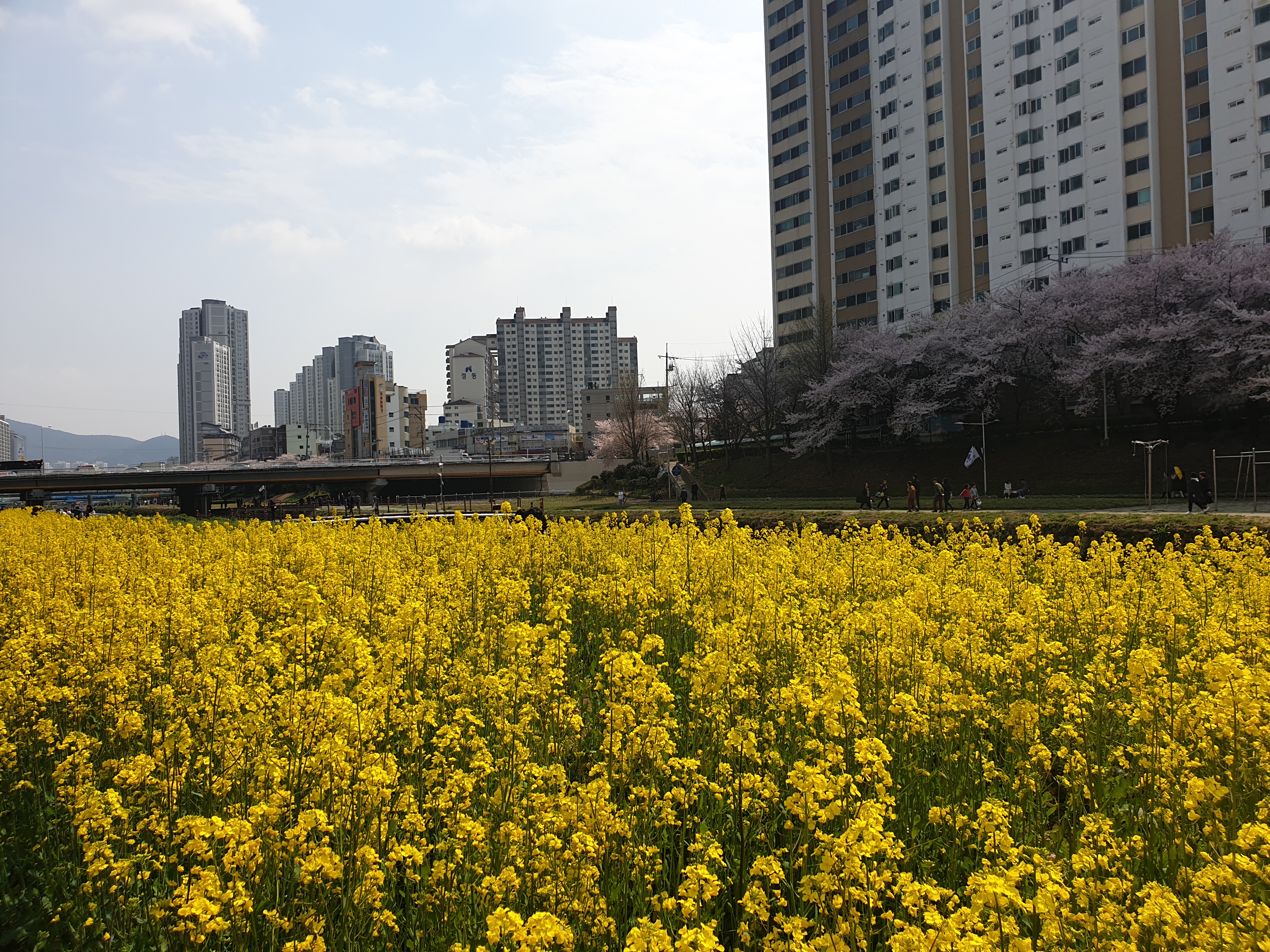
The other reason: scale. The Kkotganggil path covers 6 hectares (about 18,000 pyeong) with roughly 300,000 individual plants across 20 flower varieties. It runs along the Hwasuncheon stream from Byeokra Bridge to Samcheon Bridge, with five themed garden zones spread across the route.
Hwasun itself is a quiet county seat 30 minutes south of Gwangju. It has UNESCO-listed dolmen sites, natural hot springs, and dramatic red cliff scenery at Jeokbyeok — but almost zero international tourism infrastructure. This festival is the one time of year when the town genuinely comes alive.
What to See and Do
The Five Garden Zones
- Welcome Zone: From Nadari Bridge to the stepping stones — your first view of the flower corridor along the stream.
- Flora Garden: A European-style formal garden near the musical fountain. The most photographed section.
- Children's Garden: Near Nadari Welfare Center — moving dinosaur displays, carnival rides, and family activities.
- Spring Flower Garden: The densest flower section, stretching from Nadari Bridge to the railway bridge. Rapeseed, nemophila, delphinium, and snapdragons.
- Eco Garden: Along Beolgyo Stream — a quieter, more natural section with native wildflowers.
The Musical Fountain
The centerpiece: a 60-meter-long, 10-meter-wide fountain with water jets reaching 50 meters high. It has 263 LED underwater lights, beam projectors, and cannon-style shooters. The fountain runs on a timed schedule during festival hours — check the notice board at the Flora Garden entrance for show times.
Night Illumination
After dusk (around 6:30–7:00 PM), the entire 2.1 km path lights up. Twenty types of illuminated sculptures line the route — from LED flower arches to glowing animal figures. The concept is "flowers by day, lights by night." The night walk is the main draw: most locals arrive specifically for the 7–9 PM window.
Live Performances
- April 17, 6 PM: Opening ceremony and gala performance
- April 18, 7 PM: Spring Night Concert Part 1 — featuring Byul and Lee Seok-hoon
- April 19, 7 PM: Spring Night Concert Part 2 — featuring Seodo Band and Gummy
- 43 smaller performances throughout the 10 days — busking, magic shows, jazz
- April 25: Dolmen Market festival + Hwasun Small Film Festival
Workshops and Activities
Craft booths offer flower coaster making, handmade hairpins, flower soap, and perfume blending. Most workshops cost around 5,000–15,000 won and take 15–30 minutes. No reservation needed — just show up.
Gaemi Mountain Observatory
Connected to the Kkotganggil path, this 108-meter-high viewpoint (equivalent to a 30-story building) gives you a panoramic view of the entire flower corridor, Hwasun town, and the surrounding mountains. Worth the climb for photos, especially in the late afternoon light.
Getting There
- From Seoul (KTX): Seoul Yongsan Station to Gwangju Songjeong Station (about 1 hour 40 minutes). From there, take Gwangju Metro to Sotae Station, then transfer to a Hwasun-bound bus. Total travel time: roughly 2.5–3 hours.
- From Seoul (Express Bus): Seoul Express Bus Terminal (Honam Line) to Gwangju U-Square Terminal (about 3.5 hours). Then intercity bus to Hwasun (30–40 minutes).
- From Gwangju: Intercity bus from U-Square Terminal to Hwasun (multiple daily services, 30–40 min). By car, about 30 minutes from Gwangju city center.
- From Incheon Airport: AREX to Seoul Station, KTX to Gwangju Songjeong, then bus to Hwasun. Total: about 3.5–4 hours.
- Festival Shuttle Buses: Free on weekends, running 3 PM–9 PM. Three routes connect Hwasun County Office, Dolmen Market, and satellite parking areas to the festival site.
Food
Food trucks and vendor booths line the festival grounds. Local specialties include charcoal ice cream (5,000 won) and chrysanthemum bread (5,000–15,000 won). The festival enforces a fair-pricing policy, so you won't get the usual festival markup.
For a proper meal, walk to Dolmen Traditional Market (about 10 minutes from the festival entrance), where you'll find local Jeollanam-do cuisine — hearty stews, grilled pork, and side dishes that locals actually eat.
The festival uses eco-friendly reusable containers at many booths. Bring your own water bottle — refill stations are available along the path.
Practical Tips
- Parking: Festival parking is limited, especially on weekends. Use the free shuttle buses from satellite parking (Hanium Sports Center lot) or come by public transport.
- Best time to arrive: Come around 5–6 PM to see flowers in daylight, then stay for the night illumination. The 7–9 PM window is the highlight.
- Weather: April evenings in Jeollanam-do drop to 8–12 degrees Celsius. Bring a light jacket or fleece for the night walk, even if the afternoon feels warm.
- Shoes: The path is mostly flat and paved, but wear comfortable walking shoes — the full route plus side gardens is 3+ km of walking.
- Weekday vs. weekend: Weekday evenings have a fraction of the weekend crowds. If you can visit Tuesday–Thursday, do it.
- Photography: Golden hour (5:30–6:30 PM) gives the best flower shots. For illumination photos, arrive by 7 PM when the lights are on but the sky still has some color.
- Combine with: Hwasun Hot Springs (natural hot spring, 15 min drive), Hwasun Dolmen sites (UNESCO World Heritage, free), Hwasun Jeokbyeok red cliffs (dramatic riverside scenery, 20 min drive).
- Cash or card: Festival vendors are mixed — bring some cash (20,000–30,000 won) for food trucks and workshop fees. Restaurants and convenience stores accept cards.
- Restrooms: Public restrooms at multiple points along the path and near the fountain area.
- Language: Almost no English signage. Naver Map works better than Google Maps in Hwasun. Download the Papago translation app for menus and signs.
The Bottom Line
Hwasun Kkotganggil is what happens when a small Korean county puts real effort into a flower festival. The 5 million flowers are impressive on their own, but the night illumination turns a pleasant afternoon walk into something genuinely memorable.
This is not a well-known destination for international visitors — you won't find it in most English-language travel guides. That's part of the appeal. It's 30 minutes from Gwangju, free to enter, and runs for 10 days. If you're in Jeollanam-do in mid-April, there's no reason to miss it.